
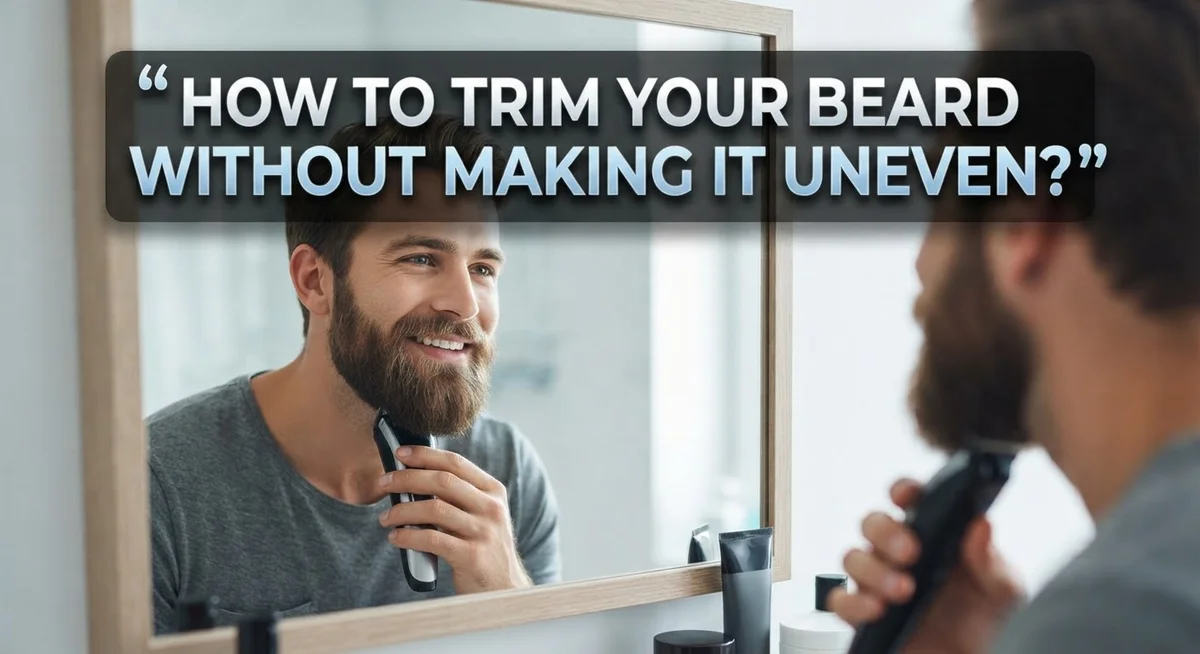
How to Trim Your Beard Without Making It Uneven?
An uneven beard can ruin your whole look. One side seems shorter. Patches look thin. You grab the trimmer to fix it, and somehow it gets worse.
Sound familiar? You are not alone.
Most beard trimming mistakes happen before you even pick up the trimmer. Wet hair, skipping the comb, ignoring your grain direction. These small errors create big problems.
The good news? Trimming an even beard is simple once you know the right steps. You do not need fancy tools or years of practice.
This guide walks you through the entire process. We will cover how to prep your beard properly. You will learn to spot your natural grain direction. We explain the three key trimming stages: sides, front, and neckline.
You will also discover where your neckline should actually sit. Hint: it is not on your jawline.
By the end, you will trim your beard with confidence. No more guessing. No more uneven patches. Just a clean, sharp beard that looks professionally done every single time.
In a Nutshell
Here’s your quick summary for trimming an even beard:
-
Wash and dry your beard first. A clean, dry beard gives you consistent results. Trimming wet hair leads to uneven length once it dries.
-
Comb your beard outward in all directions. This step reveals your true beard shape and stray hairs.
-
Trim in three stages. Start with the sides, move to the front and middle, then finish with the neckline.
-
Follow your grain direction. Run your hand across your face to feel how your hair grows. Trim with the grain, not against it.
-
Find your neckline correctly. Place two fingers above your Adam’s apple. This spot marks your neckline, not your jawline.
-
Use a longer guard first. Trim gradually instead of cutting too much at once. You can always go shorter later.
Small mistakes are easy to fix. You do not need to shave everything off if one side looks off. A few careful adjustments can save your beard and your look.
Why Beards Turn Out Uneven
Uneven beards happen for specific reasons. Understanding these causes helps you avoid them entirely.
Wet hair sits differently than dry hair. When your beard is wet, each strand stretches and hangs longer. You trim what you see, but once it dries, the hair shrinks back up. This creates the illusion of an uneven cut. Dry hair shows you the true length and texture you will actually see every day.
Skipping the comb step causes major problems. Your beard grows in different directions across your face. Some hair naturally falls forward. Other hair grows to the sides. If you do not comb everything outward first, you trim some hairs while others hide underneath. Once combed, all hair stands at the same angle, giving you an accurate picture of what needs trimming.
Trimming against the grain creates choppy results. Hair has a natural direction it grows. When you cut against this direction, the blade catches and cuts unevenly. Following the grain direction gives you smooth, consistent results.
Ignoring the three stage approach leads to mistakes. Trimming your entire beard at once overwhelms you. You lose track of proportions and balance. Breaking the work into sides, front, and neckline keeps you focused and prevents over trimming.
Placing your neckline wrong throws off your entire look. Many people trim down to their jawline. Your neckline should actually sit at the head and neck junction, above your Adam’s apple. This placement looks intentional and professional.
Using too short a guard from the start causes disaster. Starting aggressive means you cannot fix mistakes. A longer guard lets you trim gradually and make small adjustments as you go.
These mistakes are fixable. Most uneven beards result from one or two preventable errors. Once you know what causes them, you trim with confidence and get the even, sharp look you want.
Preparing Your Beard Before You Trim
Your beard needs proper preparation before you touch it with any trimming tool. This step separates even results from choppy, uneven cuts.
Start by washing your beard thoroughly. Use warm water and a gentle cleanser. This removes dirt, oil, and product buildup that can interfere with how your hair sits. Wet beard hair behaves differently than clean, dry hair. When wet, strands stretch and hang at different lengths than they actually are.
After washing, dry your beard completely. Use a towel to pat it dry gently. Let it air dry for a few minutes afterward. Damp beards still shift and move as they dry, which throws off your trimming accuracy. You need your beard in its final, dry state before you start cutting.
Next, comb your beard outward in all directions. This step is crucial. Your beard grows in multiple directions across your face. Combing reveals the true growth pattern and removes tangles. Work the comb from the roots outward. Start at your cheeks and work toward your chin. Then comb downward from your chin area.
Identify your grain direction while combing. Run your hand across your face to feel which way your hair naturally grows. This matters because trimming against the grain creates choppy, uneven results. Trimming with the grain produces smoother, cleaner lines.
Take a moment to examine your beard’s natural shape. Notice where it grows thicker or thinner. Some areas have denser hair than others. Understanding your beard’s unique growth pattern helps you make smart trimming decisions later.
Proper preparation takes five to ten minutes. This small investment prevents mistakes that take weeks to fix. Your beard is now ready for the actual trimming process.
Finding Your Beard’s Grain Direction
Your beard grows in specific directions across your face. Finding this pattern is essential before you start trimming. This natural growth path is called your grain direction.
Run your hand across your beard in different directions. Pay attention to which way feels smooth and which way feels rough. The smooth direction follows your grain. The rough direction goes against it.
Start at your cheeks. Move your fingers upward and outward. Notice how the hair naturally wants to go this way. Your cheek hair typically grows upward and toward your ears.
Move to your chin area next. The hair here usually grows downward and slightly outward. This is different from your cheek grain. Your chin has its own unique pattern.
Check your neck and jawline carefully. Hair in this zone often grows in multiple directions. Some strands point downward. Others angle toward your shoulders. This mixed pattern matters for your neckline trim.
Feel your mustache region too. Upper lip hair grows downward and slightly outward. This affects how you’ll trim the front section. Understanding this prevents choppy results.
Tilt your head in different positions while checking grain direction. Look down at your beard. Look up at it. The angle changes how grain appears. This matters because you’ll trim from various head positions.
Mark the grain direction mentally or with a pencil if helpful. Draw light lines showing which way hair grows in each zone. This visual map guides your trimming strategy.
Your grain direction is unique to your face shape. No two beards grow exactly the same way. Taking time to identify yours prevents fighting against your natural growth pattern.
Once you know your grain, trimming becomes predictable. You’ll cut with the grain in most areas. This creates clean, even results. You avoid the choppy texture that happens when cutting against grain.
This foundation step takes just a few minutes. It saves you from major mistakes later.
Step-by-Step: Trimming Sides, Front, and Neckline Evenly
Start by combing your beard outward completely. This reveals the true length and shape of each section. Your beard has three distinct areas: the sides, the front and middle, and the neckline. Treating each area separately prevents major mistakes.
Begin with the sides first. Use your comb to pull the hair away from your face at a slight angle. Trim slowly and conservatively. Move from your cheek toward your ear. Keep your movements smooth and controlled. The goal is to fade the sides gradually into your middle beard section.
Next, work on the front and middle section. This is the most visible part, so take extra care here. Comb the hair straight down and outward. Trim only the longest strands that stick out. Make small cuts rather than large ones. Step back and check your progress frequently. This prevents cutting too much too quickly.
Finally, address the neckline carefully. Place two fingers above your Adam’s apple. This marks where your neckline should peak. Tilt your head up slightly when establishing this line. Trim the hair below this point. The neckline should curve naturally from one side of your neck to the other. Avoid placing it too high on your jawline, as this creates an unnatural appearance.
Throughout all three stages, follow your beard’s grain direction. Trim with the grain, not against it. This produces cleaner cuts and a more polished look. Check both sides of your face frequently to ensure they match. Hold your trimmer at consistent angles. Use the same guard length for corresponding sections on each side.
Work methodically through each stage. This systematic approach helps you maintain balance across your entire beard. Small adjustments between stages keep everything even and proportional.
Setting the Correct Neckline and Cheek Lines
Your neckline and cheek lines form the foundation of a polished beard. Getting these right prevents your entire beard from looking crooked or unkempt.
Start with your neckline positioning. Place two fingers above your Adam’s apple. This marks where your neckline should peak. Tilt your head up slightly when establishing this line. This angle helps you see the natural head and neck junction clearly. Many people mistakenly trim down to their jawline instead. This creates an awkward appearance that throws off your whole look.
Use a longer guard initially when trimming your neckline. Work gradually from the sides toward the center. Move slowly and check your progress frequently. This conservative approach prevents over cutting. You can always trim more later, but you cannot add hair back immediately.
For your cheek lines, follow the same principle. Start higher than you think you need to go. Trim downward gradually toward your cheekbones. Your cheek line should fade smoothly into your beard without harsh edges. Keep the lines symmetrical by checking both sides repeatedly.
Work with your grain direction throughout. Trimming against your grain creates choppy, uneven results. Move your clipper or scissors in the direction your hair naturally grows. This produces clean, smooth lines.
Use a mirror positioned at eye level. Stand in good lighting so you see every detail clearly. A second mirror behind you helps you check the back of your neck. Take breaks between sections to step back and view your entire beard. This prevents you from focusing too closely on one area and missing imbalances.
Remember that your neckline and cheek lines need regular maintenance. Trim them every two to three weeks to keep them sharp and even. Consistency creates better looking results over time.
Common Trimming Mistakes That Cause Unevenness
Trimming your beard while it’s wet is one of the biggest mistakes you can make. Wet hair appears longer than it actually is, so you’ll cut more than you intend. Once your beard dries, it shrinks up and looks much shorter than expected. Always wash and dry your beard completely before you pick up your trimmer.
Trimming against your grain creates choppy, uneven results. Your beard grows in specific directions across your face. When you cut against this natural growth pattern, the hair doesn’t cut cleanly. Instead, it tears and looks jagged. Always trim in the direction your hair grows.
Skipping the comb-out step leads to hidden hairs that throw off your evenness. Combing your beard outward reveals the true length and direction of every hair. Without this step, some hairs stay matted down while others stick up. This makes it impossible to see what you’re actually trimming.
Using too short a guard from the start causes over-trimming. Many people rush and remove too much length in one pass. Start with a longer guard and work your way down gradually. This approach gives you control and prevents cutting too much at once.
Placing your neckline on your jawline instead of your neck junction creates an unbalanced look. Your neckline should sit above your Adam’s apple where your neck meets your head. Trimming too high makes your beard look disconnected from your face. Place two fingers above your Adam’s apple to mark the correct spot.
Trimming one side without checking the other side for balance is another common error. Work on one side, then check it against the other side. Make small adjustments as you go. Taking time to compare both sides prevents noticeable unevenness that’s hard to fix later.
Fixing an Already Uneven Beard
If your beard is already uneven, don’t panic. Most mistakes are fixable without losing your entire beard. The key is understanding what went wrong and how to correct it strategically.
First, assess the damage. Look at your beard from multiple angles in good lighting. Identify which areas are shorter than others. Common problem spots include one side being longer, the front being choppy, or the neckline sitting unevenly.
Start by washing and drying your beard completely. Wet beards look longer and hide the true length. Once dry, comb everything outward to see the real damage clearly. This step reveals exactly how much correction you need.
Next, use a longer guard than you think you need. This prevents making the problem worse. Trim very gradually, taking small amounts from the longer areas. Work slowly and check your progress frequently in the mirror.
If one side is longer, focus your trimming there first. Trim small sections at a time. Stop often to compare both sides. This prevents overcorrecting and creating a new problem on the opposite side.
For choppy front sections, follow your beard’s grain direction carefully. Trim with the grain, not against it. Choppy hair usually means someone trimmed against the grain. Going with the grain smooths out those rough edges.
The neckline is tricky to fix. If it’s uneven, use your two finger guideline again. Place two fingers above your Adam’s apple. Trim conservatively along this line. An uneven neckline often makes the entire beard look lopsided, so getting this right matters most.
Consider letting your beard grow for a few weeks between corrections. Growth fills in gaps and helps you see the true shape emerging. Be patient with the process. Fixing unevenness takes time and gentle trimming rather than aggressive cutting.
Final Thoughts
Trimming your beard evenly is not hard once you know the right steps. It just takes patience and a little practice.
Clean, dry hair gives you the most accurate cut. Always start there before touching your trimmer.
Combing your beard outward helps you spot stray hairs. This simple habit prevents most uneven results before they happen.
Working in three stages keeps your trimming organized. Sides, front, and neckline each need their own attention.
Following your grain direction is the golden rule. Hair cut against its natural growth looks choppy and uneven.
Your neckline placement matters more than most people think. Keep it at your neck junction, not your jawline.
Starting with a longer guard protects you from over-trimming. You can always go shorter, but you cannot add hair back.
Mistakes happen to everyone, even experienced groomers. The good news is most trimming errors are fixable with time.
If your beard turns out uneven, do not panic. Assess the problem, then correct it slowly and carefully.
Sometimes the best fix is patience itself. Letting your beard grow for a few weeks gives you room to even things out.
Good beard maintenance is really about consistency, not perfection. Small, regular trims prevent bigger problems down the road.
Every face is different, so give yourself time to learn your own growth pattern. Once you understand it, trimming becomes much easier.
With the right routine, an even beard is always within reach. Wash, comb, trim gradually, and always follow your grain.
Stay patient and check your work often. A polished, balanced beard is a result of steady care, not rushed cutting.
Frequently Asked Questions
Why does my beard look uneven even though I trimmed carefully?
Several things could cause this. You might have trimmed while your beard was wet, which makes hairs appear shorter than they actually are. You could also be trimming against your grain direction, which creates a choppy appearance. Another common reason is skipping the comb-out step. When you don’t comb your beard outward first, hidden hairs stay tucked in and throw off your balance.
Check your mirror position too. An eye-level mirror helps you see both sides clearly. If one side looks longer, compare them side by side before making more cuts.
How do I know if I’m trimming against my grain?
Run your hand across your face in different directions. Your grain flows the way your hair naturally grows. When you trim with the grain, your clippers move smoothly. When you trim against it, you feel resistance.
Always trim with your grain direction. This gives you clean lines instead of choppy spots. Your grain might flow differently on each side of your face, so check both sides before you start.
Can I fix a beard that’s already uneven?
Yes, most mistakes are fixable. Start by washing and drying your beard completely. Use a longer guard than you normally would. Trim gradually and focus on the longer side first.
Give your beard time between corrections. Letting it grow for a few weeks helps you see the full picture before your next trim. Patience works better than rushing to fix everything at once.
Should I trim my neckline differently than the rest of my beard?
Your neckline needs special attention. Place two fingers above your Adam’s apple to mark where your neckline peak should be. Tilt your head up when you establish this line.
Many people place their neckline on their jawline, which creates an unbalanced look. Your neckline should sit at the head and neck junction instead. This small adjustment makes a big difference in how even your beard appears overall.

David is the founder and editor of GroomingFinds.com, where he combines years of personal grooming experience with in-depth product research to help men find the best grooming tools and products for their needs. When he’s not testing the latest trimmers, razors, and skincare products, he’s busy writing honest, no-nonsense reviews and buying guides that readers can actually trust.


