How to Choose Between an Electric Razor and a Blade?
Choosing between an electric razor and a blade can feel confusing. Both promise a smooth shave. But they work in very different ways.
A blade gives you a close, precise shave. It cuts hair right at the skin’s surface. Many people love this classic feel.
An electric razor offers speed and convenience. You can shave dry, without water or cream. It fits easily into a busy morning routine.
Your skin type matters too. If you have sensitive skin, an electric razor may feel gentler. Blades can sometimes cause irritation or nicks.
Think about your lifestyle as well. Do you travel often? An electric razor is easier to pack. Do you prefer a barber shop level shave at home? A blade might win.
This guide breaks down the real differences between these two shaving methods. We will cover cost, comfort, and convenience.
You will learn which option suits sensitive skin. We will also share simple tips to avoid common shaving mistakes.
By the end, you will know exactly which tool fits your daily routine best.
In a Nutshell
Here’s a quick summary to help you decide fast.
-
Blades give you a closer shave. They cut hair right at the skin’s surface. They also cost less and fit easily in your travel bag.
-
Electric razors save you time. They work fast and create less mess in your bathroom. Perfect for busy mornings.
-
Sensitive skin does better with electric. These razors cause less irritation than blades. They are gentler on your face overall.
-
Blades need more skill and care. You must wet your skin first and shave with the grain. This helps you avoid nicks and cuts.
-
Electric razors cost more upfront. But they last for years with proper maintenance. Think of it as a long term investment.
-
Your lifestyle decides the winner. Frequent travelers often prefer electric options. People who want a polished look may choose blades instead.
Both tools work well when used correctly. Your final choice depends on your skin, budget, and daily routine.
Understanding Electric Razors and Blade Razors
Electric razors and blade razors work in completely different ways. Understanding how each functions helps you pick the right one for your needs.
Blade razors use sharp metal blades that cut hair at the skin’s surface. You wet your face with warm water first. This softens your beard and opens your pores. Then you apply shaving cream or gel. The blade glides across your skin in the direction your hair grows. This method gives you the closest possible shave because the blade cuts so close to the root.
Electric razors operate with fast moving blades or rotating heads. Foil electric razors have thin metal screens that vibrate back and forth. Hair passes through the foil and gets cut by blades underneath. Rotary electric razors spin in circular motions. They have multiple heads that work independently. Both types can work on dry skin or wet skin, depending on the model.
The key difference lies in cutting action. Blade razors require your active control and pressure. You decide the angle, speed, and direction. Electric razors do most of the work automatically. You simply guide them across your face.
Blade razors demand more technique. You must shave with the grain to avoid irritation. You need steady hands and patience. The process takes longer but delivers superior closeness.
Electric razors prioritize speed and ease. You don’t need shaving cream unless you prefer it. The process takes just a few minutes. You can shave dry, which means no mess on your bathroom counter.
Blade razors suit people who want the smoothest finish possible. They work well if you have thick, coarse hair. Electric razors fit people with busy schedules. They also work better if you have sensitive skin that reacts badly to blade irritation. Your specific situation determines which tool serves you best.
Foil vs. Rotary: How Electric Razors Differ
Electric razors come in two main types: foil and rotary. Understanding how they differ helps you pick the right one for your shaving needs.
Foil razors use a thin, perforated metal screen that vibrates back and forth at high speed. Hair passes through the small holes in the foil and gets cut by blades underneath. This design works best for straight, linear strokes across your face. The vibrating motion is gentle on skin, making foil razors popular for people with sensitive faces.
Rotary razors have three or more circular heads that spin independently. Each head contains rotating blades that cut hair as you move the razor across your skin. You can use circular motions or any direction you prefer. This flexibility appeals to many users who want freedom in their shaving technique.
The cutting action differs significantly between these two styles. Foil razors excel at catching short stubble and providing a close shave. Rotary razors handle longer hair better and work well if you skip a day or two of shaving.
Comfort and skin reaction vary between the two designs. Foil razors typically deliver a smoother feel because the vibration is steady and predictable. Rotary razors create a different sensation due to the spinning heads, which some people find more comfortable and others find too intense.
Maintenance also differs slightly. Foil razors need regular cleaning of the screen to prevent hair buildup. Rotary razors require cleaning between the spinning heads, which can be trickier but often works just as well.
Your choice depends on personal preference and skin sensitivity. If you prefer a gentle, steady shave, foil razors suit you better. If you want flexibility in shaving direction and handle longer hair well, rotary razors might be your answer. Both deliver fast, convenient shaving compared to traditional blades.
Wet Shaving vs. Dry Shaving: What Sets Them Apart
Wet shaving and dry shaving represent two fundamentally different approaches to removing facial hair. Understanding how they differ helps you pick the right method for your needs.
Wet shaving uses a blade razor with water, shaving cream, or gel. You apply moisture to your face first, which softens your beard and opens your pores. This process takes more time but delivers exceptional closeness. The blade cuts hair below the skin’s surface, leaving your face smooth for longer.
Dry shaving uses an electric razor without any liquid or cream. You simply turn on the device and move it across your dry skin. This method works fast and fits easily into busy mornings. No prep work means you can shave anywhere, anytime.
The mess factor differs greatly between these two methods. Wet shaving creates lather, water drips, and requires cleanup afterward. Your sink gets messy, and you need a towel nearby. Dry shaving produces no mess at all. Hair falls directly into a collection chamber, and you’re done in seconds.
Comfort levels vary based on your skin type. Wet shaving can irritate sensitive skin because the blade pulls and tugs at hair. Dry shaving feels gentler on reactive skin since the cutting action is less aggressive. However, wet shaving allows you to control pressure and angle more precisely.
Preparation demands also set these apart. Wet shaving requires you to gather supplies like water, cream, and a towel. You must wait for your skin to soften. Dry shaving needs zero preparation. You grab your device and go.
Cost considerations matter too. Wet shaving involves ongoing expenses for blades and shaving products. Dry shaving costs more initially but requires only occasional maintenance. Over time, your total spending depends on which method you choose and how frequently you shave.
Key Factors to Weigh When Choosing
Your choice between electric and blade razors comes down to what matters most to you. Think about how close you want your shave, how much time you have, and how your skin reacts to different methods.
Speed and convenience tip the scales toward electric razors. You can shave in seconds without water or cream. This makes them perfect if you’re always rushing or traveling frequently. Electric razors also produce less mess since hair stays contained in the device rather than scattered around your sink.
Shave closeness favors blade razors. They cut hair below the skin surface, leaving your face smoother for longer. If you want that ultra-smooth finish, a blade delivers better results. Electric razors leave slight stubble because they don’t cut quite as short.
Skin sensitivity matters significantly. Electric razors are gentler on irritable skin because they don’t pull or tug. Blade razors can cause redness, ingrown hairs, or razor burn if your skin is reactive. If you have sensitive skin, electric razors typically cause fewer problems.
Portability and size favor blades. Traditional razors fit easily in a bag or suitcase. Electric razors are bulkier and need charging, which complicates travel.
Cost considerations lean toward blades initially. Blades cost less upfront and require minimal investment. Electric razors demand higher spending, though they last for years with basic maintenance.
Technique and effort differ too. Blades require skill and proper technique to avoid irritation. You must shave in the direction your beard grows and apply gentle pressure. Electric razors need almost no technique. Just turn them on and move them across your face.
Think honestly about your lifestyle, budget, and skin type. Your priorities will reveal which option suits you best. Neither choice is universally better. The right razor matches your specific needs and daily routine.
Which Option Suits Sensitive Skin Best
Sensitive skin requires special care when choosing a shaving tool. Electric razors generally work better for sensitive skin because they don’t pull or tug at hair like blade razors do. The cutting action feels gentler on delicate skin.
Electric razors remove hair without direct blade contact. The metal screen or spinning heads create distance between your skin and the cutting surface. This design reduces irritation, redness, and razor burn that many sensitive skin people experience.
Blade razors work differently. They cut hair very close to the skin surface, which can cause pulling sensations. This tugging motion irritates sensitive skin more easily. The blade also creates more friction against your face during the shaving stroke.
Dry shaving with an electric razor suits sensitive skin best. You don’t need water, cream, or gel, which means fewer products touching your skin. Fewer products mean fewer potential irritants. Your skin stays dry and undisturbed throughout the process.
If you prefer wet shaving with a blade, sensitive skin demands extra precautions. You must use warm water and quality shaving cream to reduce friction. Even then, blade razors may still cause irritation for very sensitive skin types.
Foil electric razors tend to feel more comfortable than rotary models for sensitive skin. Foil razors use a gentler vibrating motion. Rotary razors spin in circular patterns, which some sensitive skin people find more irritating.
Test your chosen razor on a small area first. Start with your neck or a less visible spot. Watch for redness, bumps, or burning sensations over the next few hours.
Keep your electric razor clean and well maintained. Dirty blades or screens cause more skin irritation. Replace parts according to manufacturer guidelines to maintain optimal performance.
If irritation develops, switch tools immediately. Your skin’s comfort matters more than any shaving method.
Best Practices for a Smooth, Safe Shave
A smooth, safe shave requires proper technique and preparation. Your method changes depending on whether you choose an electric razor or a blade.
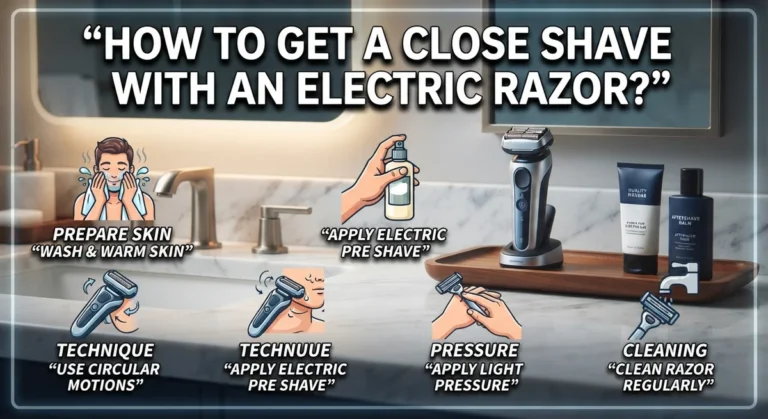
Start with clean skin. Wash your face with warm water before shaving. Warm water opens your pores and softens facial hair. This prep work matters for both electric and blade razors.
For blade shaving, apply shaving cream or gel after warming your skin. Let the product sit for 30 seconds. This extra step creates a protective barrier between the blade and your skin.
Shave in the direction your beard grows. This is crucial for both methods. Shaving against the grain might feel closer, but it increases irritation and ingrown hairs. Move slowly and deliberately across your face.
Press gently on your skin. Many people apply too much pressure, thinking it helps. Hard pressure actually causes more irritation and nicks. Let the razor do the work without forcing it.
For electric razors, hold the device at a slight angle to your skin. Move it in circular motions or straight lines, depending on your razor type. You don’t need water or cream, which makes the process faster and less messy.
Rinse thoroughly after shaving. Cool water closes your pores and calms your skin. Pat your face dry gently with a clean towel.
Apply aftershave balm or moisturizer. This step protects your skin and prevents dryness. Avoid alcohol based products if you have sensitive skin, as they sting and dry out your face.
Replace blades regularly. Dull blades tug at hair instead of cutting cleanly. Clean electric razors after each use to prevent bacteria buildup.
Keep your shaving area clean and organized. Dirty tools cause infections and skin problems. Replace or maintain your razor according to manufacturer guidelines.
Common Mistakes to Avoid With Either Method
Both shaving methods come with pitfalls. Knowing what to avoid helps you get better results and protect your skin.
With blade razors, the biggest mistake is shaving against the grain. Your beard grows in a specific direction. Shaving against it gives a closer shave initially, but it causes irritation, ingrown hairs, and razor burn. Always shave in the direction your hair grows, even if the result feels slightly less close.
Another common error is using a dull blade. Dull blades tug and pull instead of cutting cleanly. This damages your skin and causes discomfort. Replace your blade regularly, especially if you notice resistance or tugging sensations.
Skipping preparation is another frequent mistake. Rushing into shaving without warming your skin first makes the process harder. Wash your face with warm water beforehand. Your hair softens, and your pores open. This makes shaving smoother and safer.
With electric razors, many people press too hard against their skin. The device does the work. Pressing hard doesn’t improve results. It actually causes irritation and discomfort. Let the razor glide gently across your face.
Neglecting maintenance is a mistake with electric razors. Dirty heads clog with hair and soap residue. This reduces cutting efficiency and can irritate your skin. Clean your razor after each use according to the manufacturer’s instructions.
Another error is using the wrong technique. Foil razors work best when you move them in straight lines. Rotary razors perform better with circular motions. Using the wrong pattern wastes time and leaves patches of stubble.
Both methods suffer from one shared mistake: ignoring your skin’s response. If you experience redness, irritation, or bumps, stop using that method or tool. Your skin is telling you something isn’t working. Switch techniques or consider the other shaving method entirely.
Final Thoughts
Choosing between an electric razor and a blade comes down to your personal needs. There is no single right answer for everyone.
Think about your priorities first. Do you want a close shave, or do you value speed and convenience more?
If you travel often, an electric razor makes sense. It works without water or cream, so you can shave almost anywhere.
If you have sensitive skin, an electric razor often feels gentler. It avoids direct blade contact, which reduces irritation and cuts.
A blade razor gives you a closer shave. It costs less upfront and fits easily in any bag.
Your budget matters too. Electric razors need a bigger investment at first. Blades are cheaper to buy but need regular replacement.
Think about maintenance as well. Electric razors need cleaning and occasional part replacement. Blades simply get swapped out when dull.
Some people like a light stubble look. An electric razor handles this style better than a blade.
Others prefer completely smooth skin. A blade razor usually delivers that result more reliably.
Try both methods if you can. Testing helps you understand what feels right for your skin and routine.
Pay attention to how your skin reacts. Redness or irritation tells you to switch tools or adjust your technique.
Remember that neither method is universally better. Each one suits different lifestyles, skin types, and grooming goals.
Your final choice should match your daily routine. Busy mornings favor electric razors. Extra time in the bathroom works well with a blade.
Whatever you choose, good technique matters most. Proper prep, gentle pressure, and regular maintenance make any shave better.
In the end, comfort and confidence should guide your decision. Pick the tool that leaves your skin feeling smooth and healthy.
Frequently Asked Questions
Is an electric razor better for sensitive skin?
Yes, electric razors are generally more comfortable for sensitive skin. They don’t pull or tug at your hair like blades sometimes do. The shaving head moves quickly and smoothly across your face. Your skin experiences less irritation overall. If you have reactive skin, an electric razor often causes fewer bumps and redness.
Blades require more pressure and direct contact with your skin. This can trigger irritation, especially if your skin is already inflamed or prone to razor burn.
How much closer does a blade shave compared to an electric razor?
Blade razors typically give you a closer shave. They cut hair right at skin level, leaving almost no stubble. Electric razors cut hair slightly above the skin surface. You may notice a light shadow or feel of stubble by evening.
If a completely smooth finish matters to you, a blade is your better choice. Electric razors work well if you prefer a light stubble look or don’t mind touching up every few days.
Do electric razors need more maintenance than blades?
Yes, electric razors require regular maintenance. You need to clean the shaving head after each use. Some models need lubrication or blade replacement yearly. Blades are simpler—you just replace them when dull.
Electric razors last longer overall, but they demand more attention. Keeping them clean prevents hair buildup and extends their lifespan.
Which option is faster for your daily routine?
Electric razors save time. You can shave without water or cream, and the process takes just a few minutes. No rinsing or complicated prep work needed.
Blade shaving takes longer. You need warm water, shaving cream, and careful technique. Rinsing and aftercare add extra minutes to your routine.

David is the founder and editor of GroomingFinds.com, where he combines years of personal grooming experience with in-depth product research to help men find the best grooming tools and products for their needs. When he’s not testing the latest trimmers, razors, and skincare products, he’s busy writing honest, no-nonsense reviews and buying guides that readers can actually trust.